Ruto meets AUC chief Mahmoud Youssouf amid growing doubts over union’s reform agenda
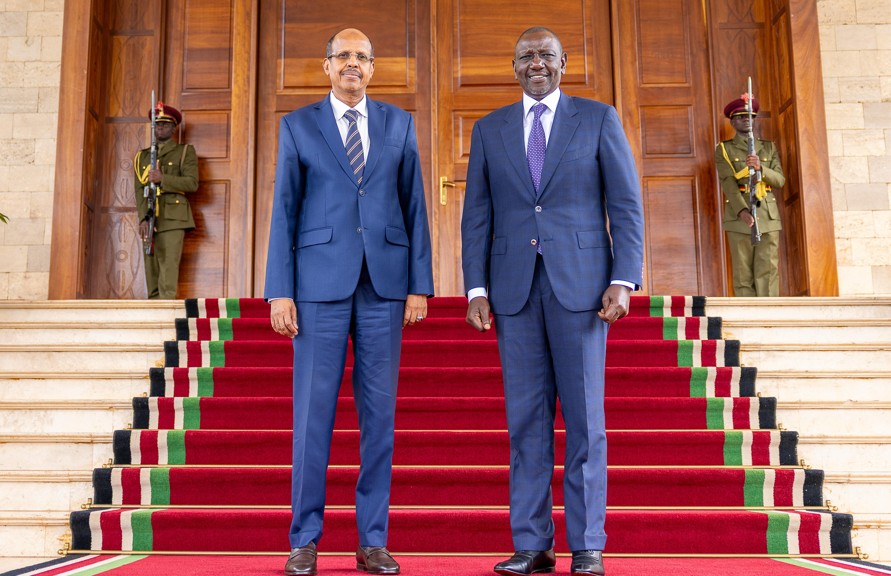
Mohamoud briefed Ruto on preparations for the upcoming Special Summit on AU Reforms, and thanked Kenya for its "continued support" and for staying engaged despite bruised political egos.
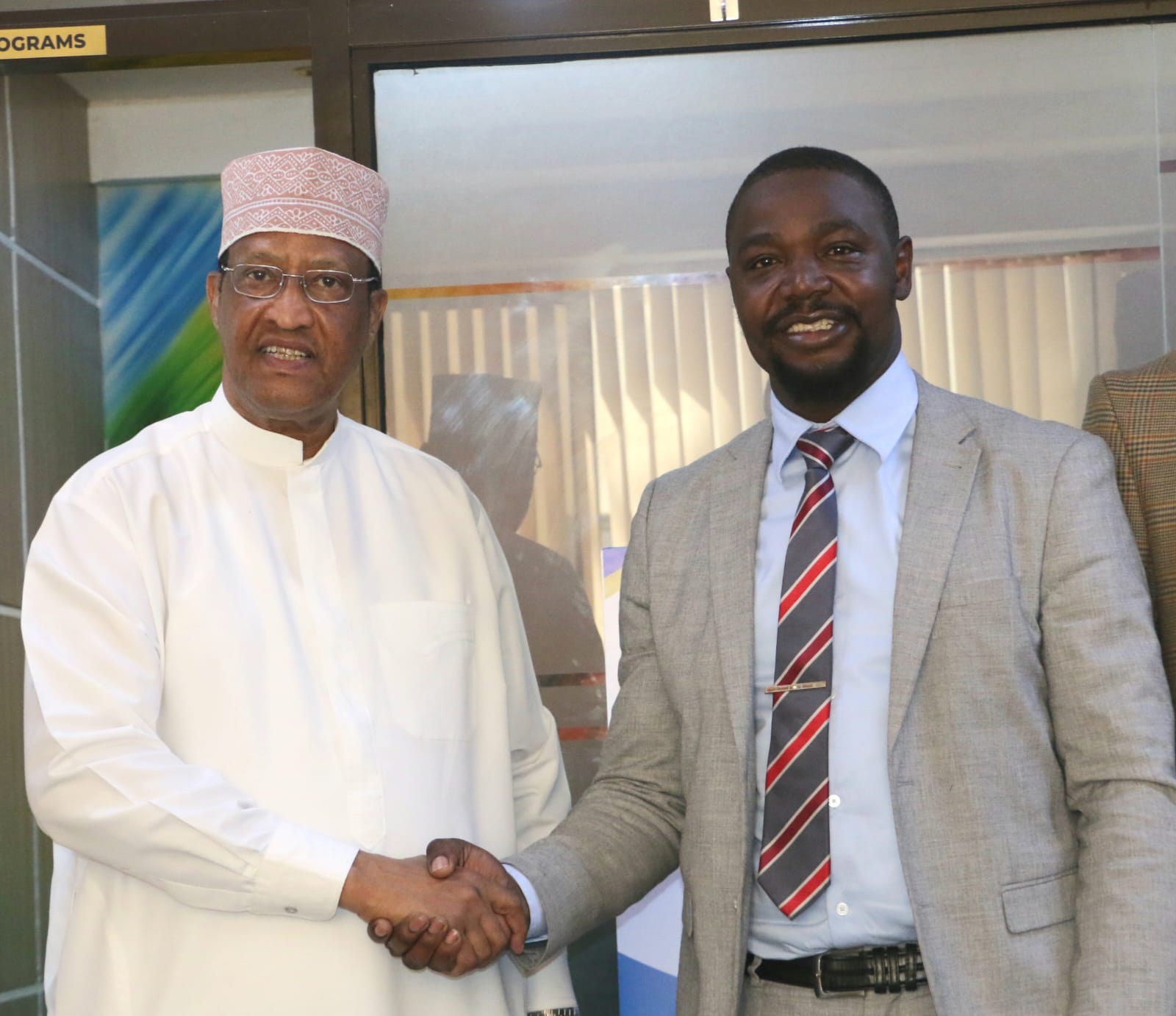
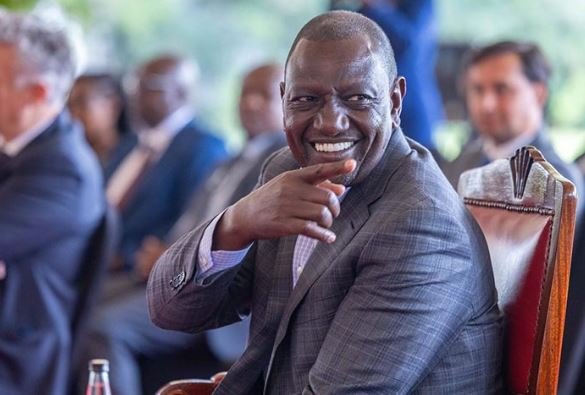
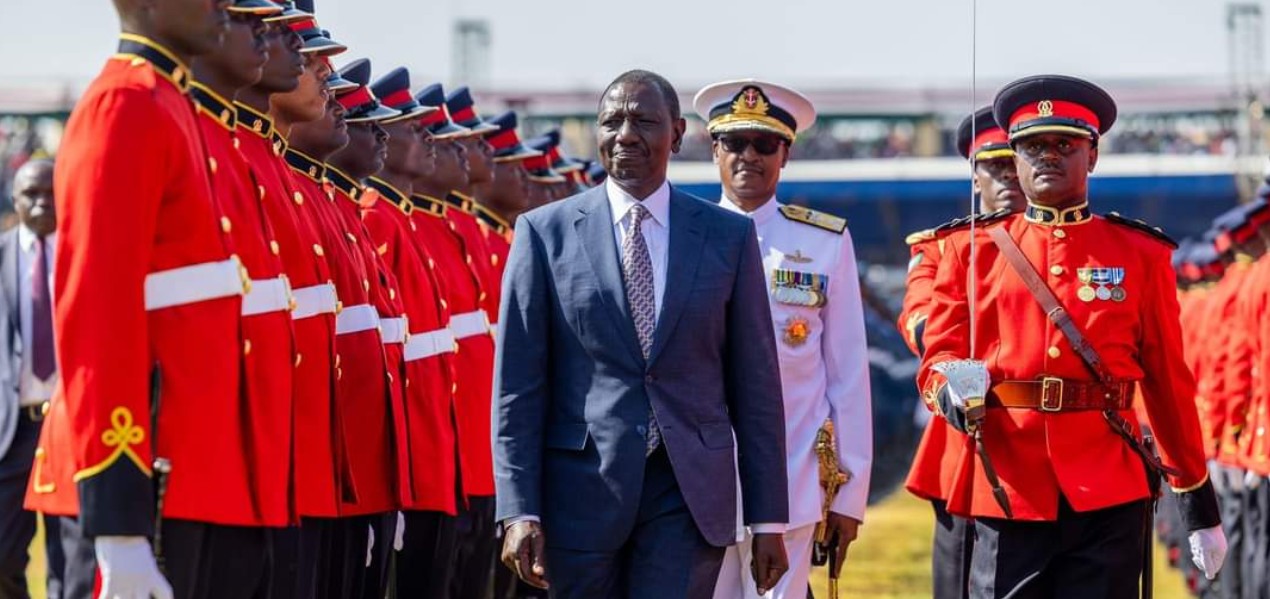
President William Ruto on Thursday held his first in-person meeting with African Union Commission (AUC) Chairperson Mahmoud Youssouf, marking a low-key diplomatic milestone following Kenya’s failed bid to secure the AU leadership through Raila Odinga.
But far from dwelling on electoral upsets, the two men focused on the thorny question that continues to haunt the continental body: reform.
More To Read
- UNAIDS hails Kenya–US health framework as major boost for HIV response
- Kenya, US sign Sh208 billion health cooperation deal to transform to strengthen primary care, services
- Trump faces rising backlash over remarks targeting Somali immigrants
- Ruto backs IMF partnership as key to Kenya’s debt, economic reforms
- Somalia welcomes first group of Sudanese students under new scholarship programme
- Mogadishu’s Hamarweyne market shut for third day amid tax dispute
According to the AU, Mahmoud briefed Ruto on preparations for the upcoming Special Summit on AU Reforms, and thanked Kenya for its "continued support" and for staying engaged despite bruised political egos.
The leaders also discussed regional peace and security, including East African Community–SADC coordination on the eastern DRC conflict and the winding down of ATMIS in Somalia.
But while regional coordination may still be a talking point, it has largely stalled.
Mediation efforts between Rwanda and the DRC have quietly shifted to Doha and Washington, sidelining continental mechanisms.
At the centre of the AU's institutional overhaul lies a more familiar malaise: money.
Overwhelmingly donor-dependent
The organisation remains overwhelmingly donor-dependent, with nearly 70 per cent of its $650 million budget financed externally.
At a recent session in Marrakech, Sudanese-British billionaire Mo Ibrahim put it bluntly.
"You call them colonisers, but when they give you money, they're partners," he quipped — to the visible discomfort of AU leaders.
Algerian diplomat Selma Malika Haddadi, serving as AUC deputy chair, recently reminded the AU's Permanent Representatives in Addis Ababa of just how hollow reform rhetoric has become.
Only 17 of the AU's 55 member states have implemented the much-touted 0.2 per cent import levy agreed in the 2016 Kigali Decision — a mechanism meant to free the Union from donor strings.
If applied in full, it could fund the AU's entire operational budget, 75 per cent of its programmes, and a quarter of its peace operations. Instead, it remains a footnote.
Ruto, for his part, offered the usual assurances.
He applauded Youssouf's "leadership," welcomed "progress," and reaffirmed Kenya's "steadfast commitment" to a more inclusive Union that "leaves no one behind."
But as Haddadi pointed out, the gap is not ambition, but follow-through.
Top Stories Today